Introduction: when my mother died in 1983 I asked if I could have the few family papers. The only Hagan official documents were grandfather's Ben's short birth certificte and his marriage certificate. From that I found his father had been in the 13th Hussars regiment. I obtained a full copy of his birth certificate that gave me his mother's name - Mary Snape. After more than 20 years I found a Census entry for Ben senior: 1871 Preishill Barracks, Edinburgh. From that, his detailed army records gave much detail from his birthplace aged 18 to his death in 1890.
Aims for my Hagan family history.
To find:
Since then there has been some progress but no definitive answers to most. See the bottom of this page.
Paper trail
My paper trail is very limited. My father, Lloyd John, was born in Nelson, Lancahire on 3rd Ausust 1915 and he died aged 67. His father, Benjamin, was born at 106 Gregson Street, Everton, Liverpool on 24 January 1888 and he died in Nelson aged 63 years.
Benjamin's father, also Benjamin, was born around 1850. He enlisted to join the 13th Hussars at Clones and gave his place of birth in Ballybay, County Monaghan and his age on 15 January 1866 as 18 year but on both his marriage and death certificates it appears he was only 16 upon enlisting. He gave his occupation as a baker. There is documentation of his life from then until his death on 14 October 1890 at Everton, Liverpool, aged about 40 years. His discharge papers, 10th June 1884, completed 2 March 1886, gave his next of kin mother Sarah Ann living in Belfast, Antrim and his brother John living in Dublin Street, Monaghan. Upon marriage, 27 April 1887 he gave his father's name John, deceased publican (licenced victualler).
An 1856 the Ballybay register gave John Hagan publican and confectioner. It also gave "Hagan, Mrs" a dressmaker. (In 1870 the Ulster Directory recorded for Ballybay a Sarah Ann Hagan - dressmaker, no John).
I have no further Hagan paper trail. February 2021
Documents
When my mother died in 1983 I asked her for and was given our family papers. Amongst them was grandfather Ben's short birth certificate. I purchased the long version and found that his mother was Mary Snape and his father was also named Benjamin.

Also was his marriage certificate. He married May Parkinson in 1911 and named his father Benjamin, deceased and sergeant major in the 13th Hussars.
Many years later I was searching gg father Benjamin and found a 1871 census return from Preishill barracks, Edinburgh, Scotland. Benjamin was in the 13th Regiment and was born in Ireland.

I wrote and asked for his army papers. Two of them had valuable family history information: his recruitment certificate gave place of birth

and his Service certificate giving next of kin and where they lived in 1881.

His father, John is not recorded so perhaps he died prior to 7 November 1881, even before 1870. Now known (2021) he died 1877
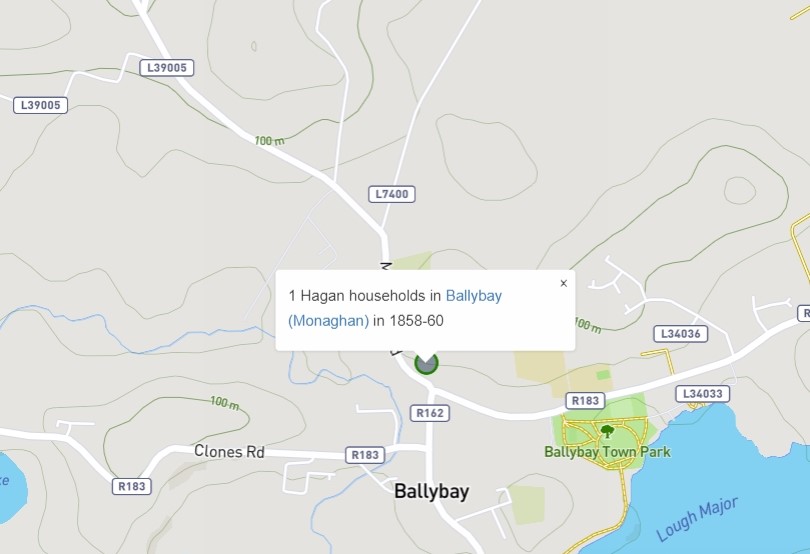
I am now sure that the single Hagan family living in Ballybay, County Monaghan during the mid 19th century were my direct paternal heritage. I am sure because of the documentation coupled with the fact that grandfather Hagan i 1949 or 1950 gave me a whip and sawfish saw tellig me they were brought from Africa by his father. I donated the whip to Kew Gargens, London because is has some botanical importance coming from Natal in the 19th century.
June 2021, I have now found his likely death certificate. This gives his occupation, a baker; died in Ballybay and he was aged 77 when he died 13 February 1877, so he was most likely born 1809 or 1810. Further details of John belowBelow is a copy extract from the uk army British Empire website - the dates and actions are as on Benjamin´s Military History Sheet.

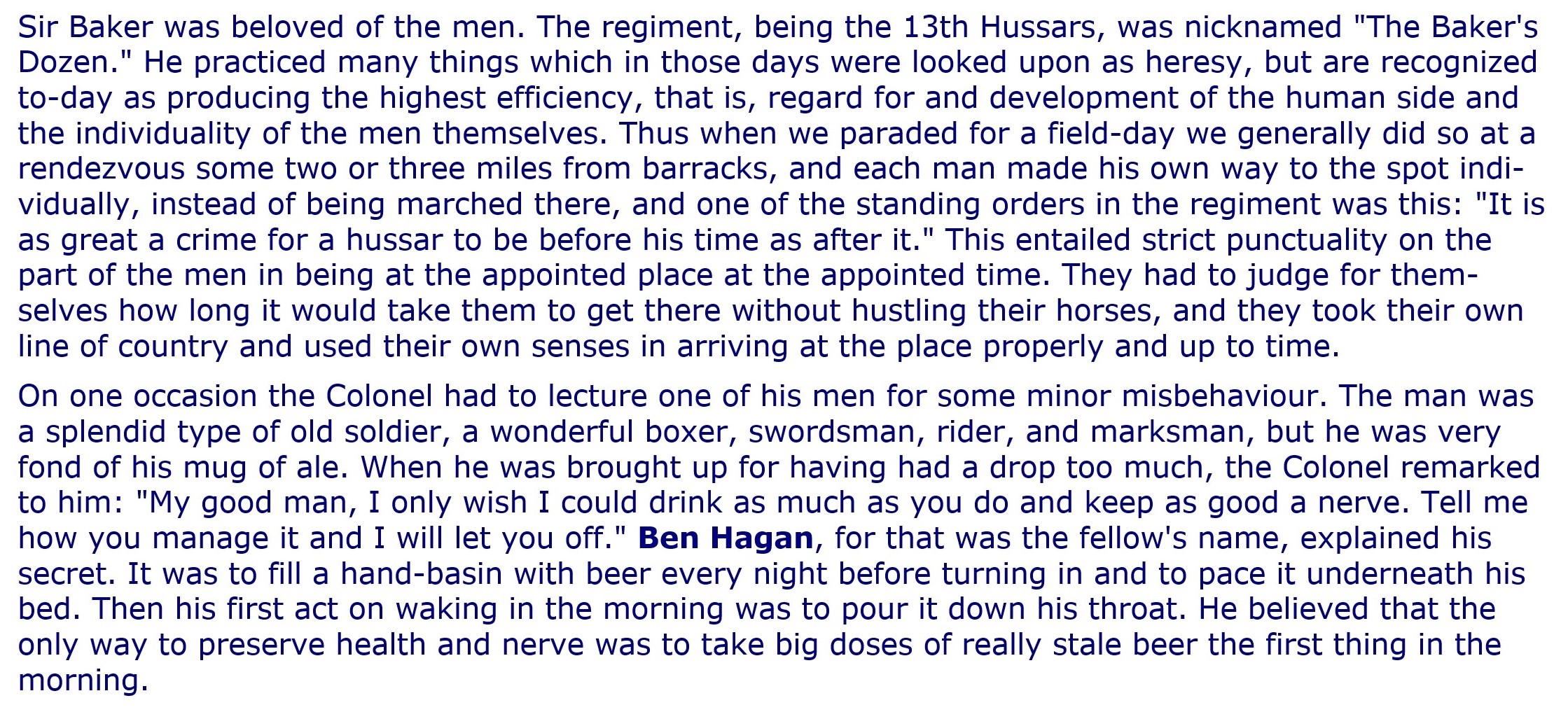
Below is an extract from Baden-Powell (Scouts) writing about his ex-commanding officer Sir Baker Russell. Great grandfather Benjamin is mentioned and interesting - his physique.
When Benjamin left the army in March 1886, after 20 years service, he moved to Everton, Liverpool. There he met and married Mary Snape at Christostom Church, both from 46 Spencer Street, Everton. Their son also Benjamin was born in 24 January 1888 and and Mary was born Q3/Sep 1889 and she died aged 3 Q4/Dec 1892. Benjamin had died about earlier, Q4/Dec 1890 aged 40.
By 1899 Mary and Benjamin had moved to Blackburn where Mary worked in a shop. She could not afford to feed Benjamin so he was placed in an orphanage in Blackburn. Further details click here
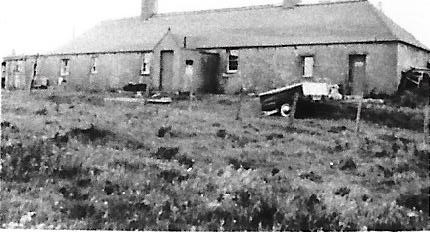
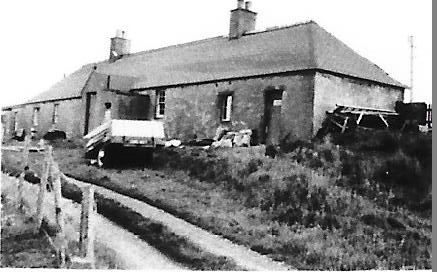
In 1861 John and Sarah Ann lived at 147 Main Stree Ballybay, Monaghan and below are copies of Griffith Ireland Valations carried out between 1848 and 1864. This was used to determine the Poor Rate - monies raised to support the poor and destitute.


I've marked where their property was before it was demolished to make way for Meeting House Lane widening:
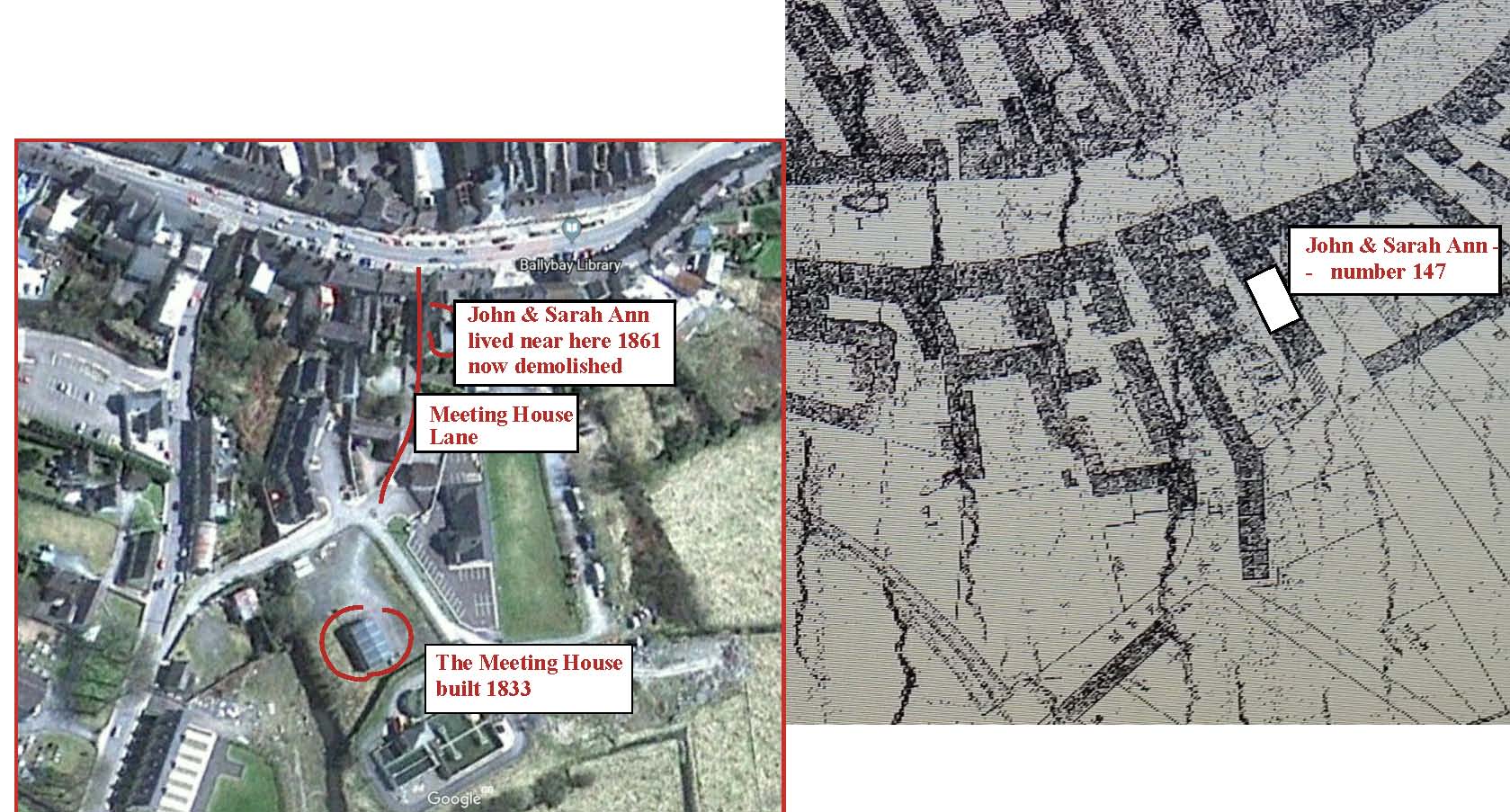
1861 John & Sarah Ann address

Above and below, as it is now in 2018. Properties around number 147 have been demolished to widen the road. These properties, above left, are similar.

The 1846 Slater´s Directory gives John as confectioner.
John & Sarah Ann are recorded in 1856 working as a publican & confectioner and dressmaker respectfully. I have been told these were "good" occupations during the Great Famine.
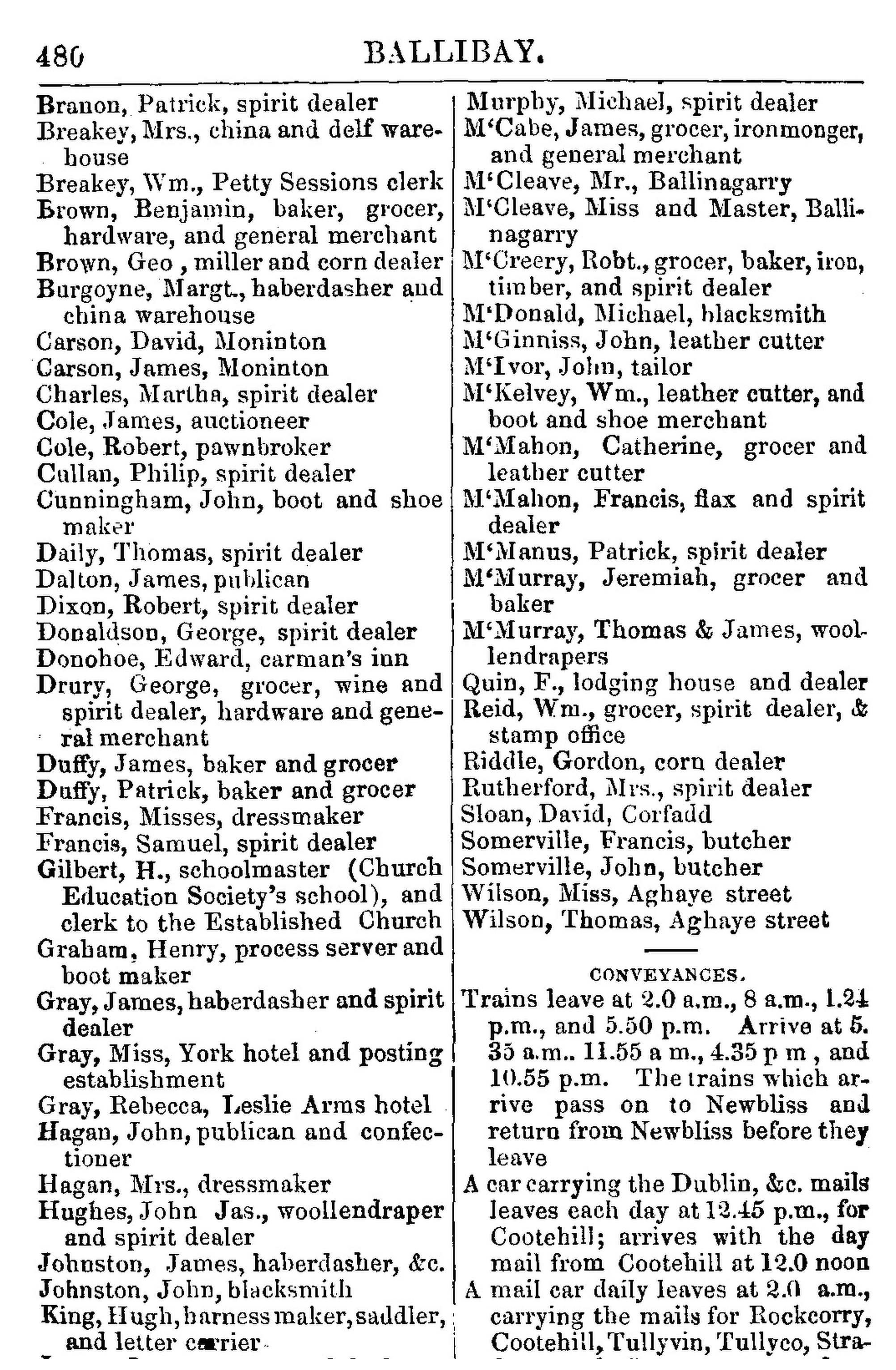
By 1870 only Sarah Ann was recorded in the Ulster Directory as a dressmaker. There was no mention of John. Again the 1870 SlaterÂs Directory gives Sarah as a dressmaker.
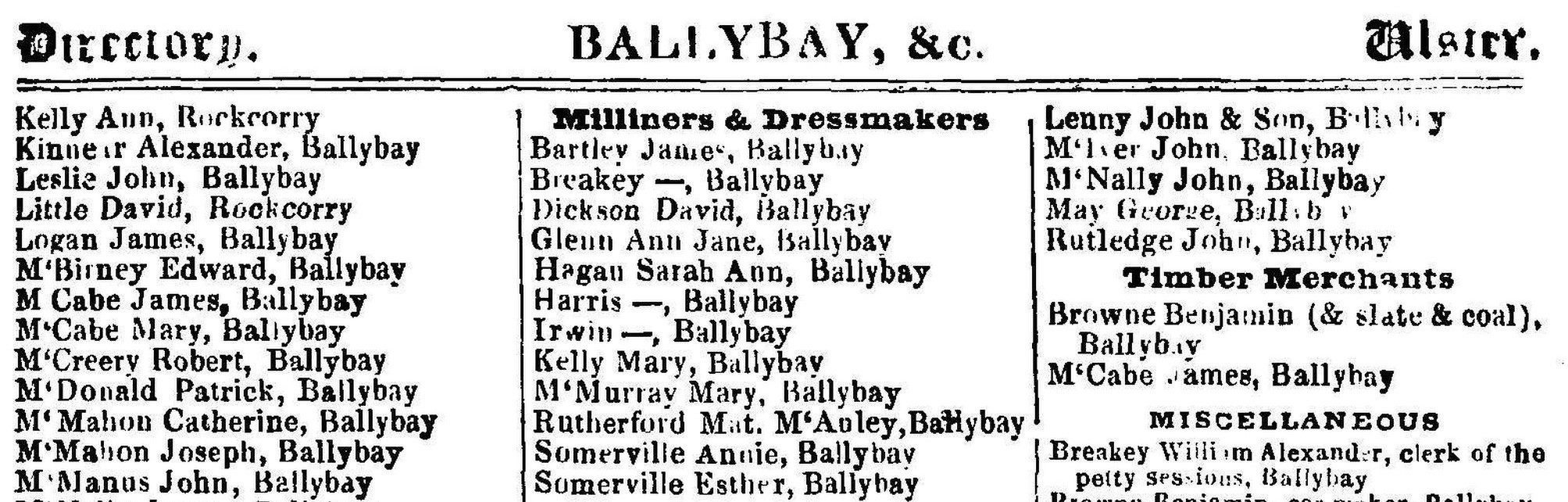
Below is the entry for John´s death in 1877. His Hagan family was the only one in Ballybay at that time, confirming authenticity of the document.


It would be great if I could contact other descendants of John & Eliza Wells. Some of them emigrated to the US.
-
Benjamin (II) Hagan 1888-1951
- The 1891 Census shows Mary Hagan b1861 was a widow with children Benjamin(b1888) and Mary (b1890) living at 27, Minshull Street, West Derby, Liverpool. She was working as a laundress.
- 1901 Census gives Benjamin in the Blackburn Orphanage, Wilpshire.
- The 1911 Marriage Certificate between Benjamin Hagan and May Parkinson, 28 October, gave both Benjamin and May cotton weavers. Benjamin gave his father´s occupation as Sargeant Major in the 13th Hussars. (This is incorrect - he was a corporal)
- Benjamin died 6 May 1951 and is buried at Walton Lane Cemetery, Nelson Benjamin and May left 2 sons, Victor Benjamin (1913-1952) and Lloyd John (1915-1982)
- Data from both STRs and SNPs indicate that our Hagan surname is not adopted, not an NPE (non paternal event) but descendants of an ancient north west Ireland clan, possibly from Niall of the Nine Hostages who lived around the end of the 4th century AD/CE. From that time to being members of cenel Eoghan through Fergus, Coelbad and Ogain we have the name O Agán / O'Hagan, about 900 AD.
- Through the generations from Ogain until the destruction of Tullyhogue Fort by Mountjoy in 1602 the descendants are unknown. The later regrant of land to individual clans/families is also unknown.
- Possibly the O'Hagan clan families dropped the O' to became Hagan so that they were more anglicised hence more accepted by the Englsh and could have better working conditions. Interestingly, many Irish reintroduced their O' during the 19th century.
- Again, during the 17th and 18th centuries my ancestors may have lived amongst the Protestant families and converted from Catholicism.
- I have learnt a great deal about the Irish celtic culture whilst trying to find my great grandfather's roots. I was interested to learn that he would have faired relatively well during the great famine of the 1840's, being a master baker and publican.
- John and Ann 1856
- Griffin Valuation, 1861
- Army Career 1866-1886
- Sarah Ann, Dressmaker 1870
- 1871 Scotland Census
- Enrol 1
- Enrol 2
- 13th Hussars Dress
- 1881 John Dublin Street & 1881 John Dublin Street
- 13th Hussars 1866-85
- Benjamin´s African whip.
- Military Record
- Army Career 1866-1886
- African whip
- 1887 Marriage Certificate
- 1888 Birth Certificate
- 1891 Census
- Orphanage documents
- 1901 Census
- 1901 Mary Census
- 1911 Census
- 1911 Marriage Certificate
- St Chrysostom Church
- 1939 Marriage Certificate
Daughter Mary died before 1899
I wrote to the Orphanage and they kindly sent me copies of their records from his admission to time after leaving.
His mother Mary worked Walmsley's Eating House, 5-7 Church Street, Blackburn for 5 shilling (25p) a week, now equivalent to about £110 a month..
She could not afford to feed and cloth herself and her son so her employer asked if Ben could be placed in the orphanage. He was admitted 25 January 1900 and left 26 May 1902 to work at Mr Butcher's Boot Shop, King Street, Blackburn. From 20th December 1904 he worked at the Print Works and lived at 19 Watt Street, Sabden. In April 1908 he lived at 139 Clitheroe Road, Sabden.
Victor and Lloyd John Hagan Victor was born 1913 and died 9 December 1952. He married Eileen Hunt (1926-2004). They had one child, Stephen who married and had 2 daughters.
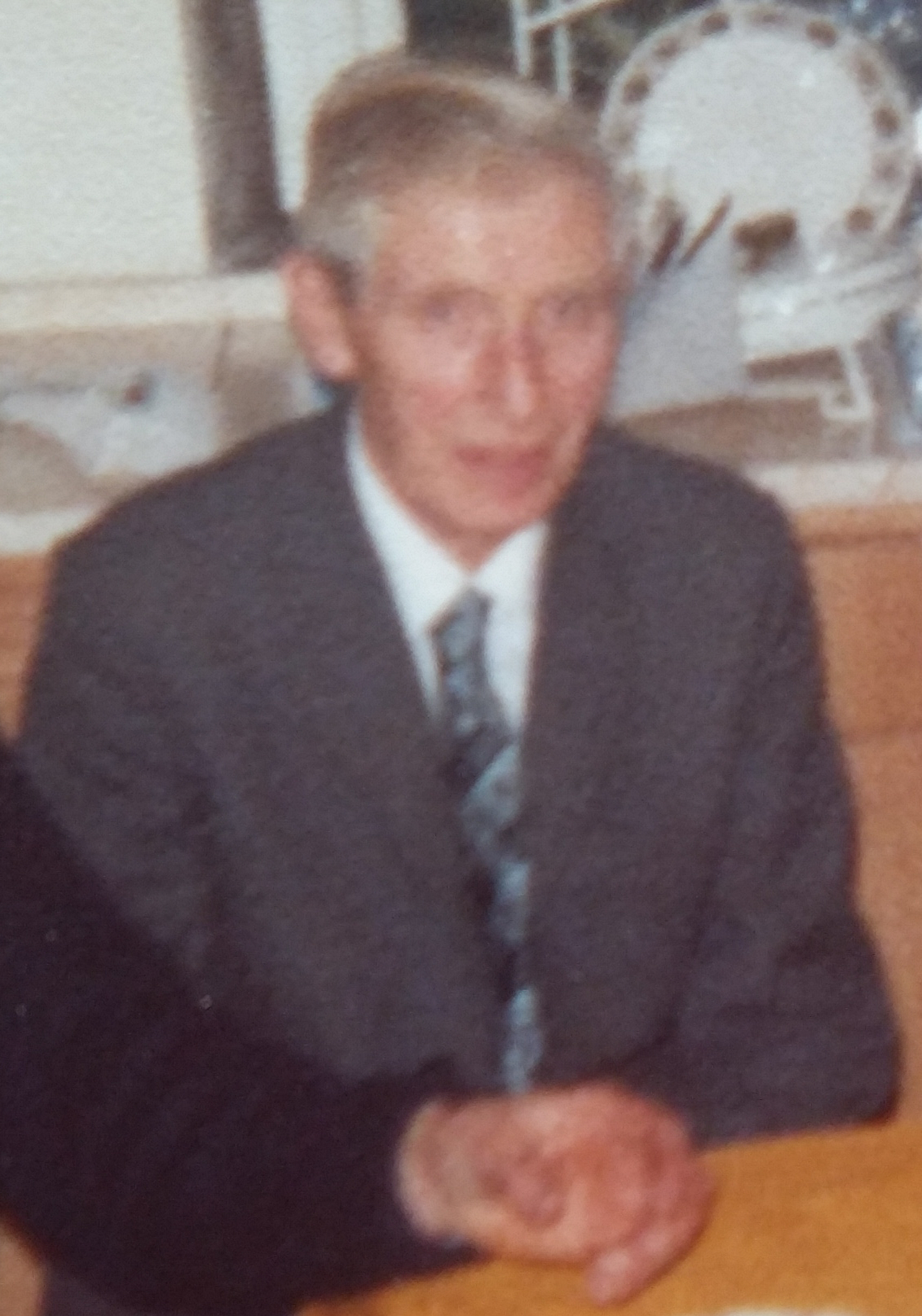
My father, Lloyd was born 3rd August 1915 and died 13th December 1982. He married Ena Whittaker (13 April 1913 - 1983). They had four children.
Lloyd passed the entrance examination to attend Nelson Grammar School. He went on to study pharmacy and gained an M.P.S. (Bradford) on 16 July 1938. During WW2 he spent time in Africa then in Shetland where my mother went with her children from August 1944.
Further Hagan ancestry details.
|
Lloyd John 1915-1982 |
Benjamin 1888-1951, |
Benjamin 1848-1890 |
|
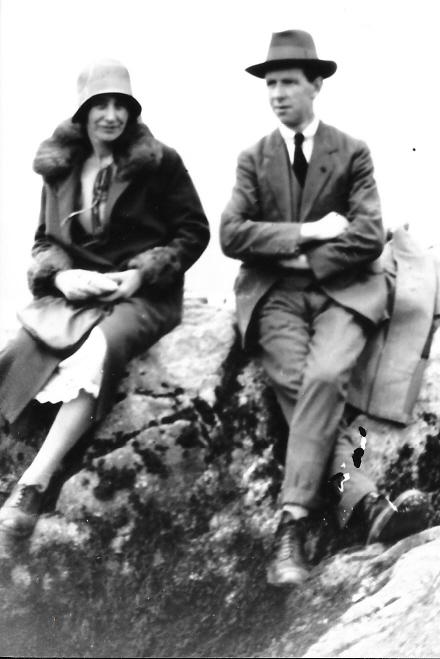
He married Ena Whittaker July 1939. His Best Man was Stacey Hall, hence the "Stacey" in our names.
|
My grandfather was born 24 January 1888 at 106 Gregson street, Everton, Liverpool. His father who had been in the army 25 years lived, married and had children died when young Benjamin was 8 years old. The army pension stopped and his mother Mary had to support him. In 1900 he was placed in an Orphanage in Blackburn on 25 January 1900 because his mother could not support him on her earnings of 5 shillings (about £25 now) a week. He was a devout Jehovah's Witness and went to America on a number of occasions. He was a keen amateur photographer and coloured film plates but unlike his wife who was an accomplished seamstress and gardener he was regarded as a lazy person by his contemporary family members.
When I was aged 10 or 11 he gave me a whip made from a tree branch and a saw fish sawm. He said that he had been given them by his father and ghey were from Africa. He knew no more about them. I had the whip identified at Kew Gardens and it is now in their Collection. |
After his discharge from Norwich he moved to 46 Spencer Street, Everton, Liverpool where he married Mary Snape on 17 April 1887 at St Crystostom's Church, Aubrey Street, West Derby, Everton. He gave his father's name as John, deceased. From his service in Africa Ben brought back a whip and a saw fish saw. My grandfather gave them to me when I was about 12 years old. I took the whip to Kew Gardens and the staff have identified it as coming from the Natal area. I have donated it to their botanical collection.
|




|
At my 75th birthday party Richard suggested that as I had done so much tracing our family history I should write my own.
One of the disappointments I've had doing the research was that it would have been much easier if I'd spoken to both of my parents, all 4 grandparents and my 2 great grandparents about their reminiscences. Two things I was told were: my mother said we were descended from Tom Sayers the world champion bare fist boxer. We are certainly not directly descended but could be distant cousins and the other was Nanny said we were descended from Oliver Cromwell. There's no evidence as yet!
I did not enjoy secondary school so went to Burnley College to study for my "A" level GCE's. My subjects were chemistry, physics and mathematics plus "O level French because in those days a foreign language was required for university entry. I was given a conditional entry to read chemistry at Manchester University should I obtain the grades; yes, at "A" level, maths A, chemistry B and physics C but failed French "O" level so I worked as a laboratory technician at the College under Miles Ainsworth in the science department and Mr Learoyd in the (coal) mining department. Miles was interested in electronics and showed me how to make a valve amplifier. I made a mains supply amplifier using a ECC83 double triode valve that I connected to our record player at home. It worked perfectly! I was hooked on electronics and I followed developments throughout my career and beyond. As an older teenager my main hobby was my chemistry set. Not really a 'set' but a fully working laboratory where I was able to carry out semi-micro analysis of various samples. For example, I extracted arsenic from old perforated zinc sheeting. Wasps were a particular nuisance in early Autumn as they ate the plums and other fruit. I sought out their nests, put potassium cyanide at the entrance then added dilute hydrochloric acid to that. Fortunately I was able to smell the gas, so it was not a problem. Health and Safety it wasn't! To be continued. 3 Monarchs - Thursday, 8 September 2022Early 1952 my father asked my headmaster if I could deliver papers before school; so from January aged 11, I began a paper round. My round began at the bottom of Church Street in Barrowford, Lancashire. My most vivid memory from that time was not going fom Junior to Secondary school or anything else but delivering papers on Wednesday 6th February 1952. At each paper I pushed through the letterbox I thought "You'll not believe the king is dead". People would read their newspaper, sit around the wireless (radio) and probably go to the pictures (cinema) to see the news in more detail. How daily life has changed!
|
|